Showing posts with label books. Show all posts

Sunday, May 2, 2021

Sharing Our Stories: How a pastor's dream changed America


A Pastor’s Dream that changed America
A guest post by Kristen Terrette

He was a pastor first.

This sentence has run through my mind for years.

After working on the manuscript since early 2016, my Young Adult novel, See You Monday, released on April 30 with Elk Lake Publishing. That’s five years of writing, editing, and rewriting. It’s also a long time to mull over a certain scene.

Parts of the novel slip back into the early sixties. And one scene takes us to August 28, 1963—the day the March for Jobs and Freedom was held in Washington D.C., and where Dr. Martin Luther King, Jr. gave his iconic “I Have a Dream” speech.

I want to discuss this day and this great man but decided an excerpt from my story will help me explain. In this part of the story, we’ve just read about 10-year-old Sandy (who’s now a grandmother) watching the news coverage of the March and Dr. King with her family. Now, back in “present day,” Grace (Sandy’s 17-year-old granddaughter) can’t believe her grandmother witnessed the speech on live TV.

Excerpt from See You Monday:

~ Grace ~

“Mimi, I can’t believe you watched the speech live.”

“It was fantastic.” Her hand went over her heart.

Grace turned to her mother. “Mom, we talked about it all last week on its anniversary.” She turned back to Mimi. “Apparently, there were like 250,000 people there. The ‘I Have a Dream’ speech was voted the most well-known speech ever. Dr. King even won the Nobel Peace Prize.”

Mom poured herself another cup of coffee. “I had to read and watch it in school too, you know. Back in the nineties.”

“Dr. King spoke with such passion.” Mimi took the plates from the table and walked to the sink. “I’m shocked to find we, as a society, forget a major part of his background.” The plates made a clanking sound as she put them in the sink. “Remember,” she pointed at Grace, “he was a pastor first. We forget his speech was laced with many Bible verses.”

Mimi took a deep breath and gripped the sink’s edge. “I’ve read interviews from people who were there in the crowd, and I’ve watched his speech many times since I was a child. Did you learn he veered from his typed-out, prepared speech about twelve minutes into his, roughly, sixteen-minute talk?”

Grace interjected, “Yeah, and we learned Mahalia Jackson, you know the famous gospel singer, yells to him around the twelve-minute mark, ‘Tell ’em ’bout the dream, Martin! Tell ’em ’bout the dream!’”

Both adults hooted at Grace’s high octave voice. Mom said, “My, how Mahalia could sing.”

Mimi started again. “Yeah. And Clarence Jones, a good friend of Dr. King, is quoted numerous times recalling how he turned to the person next to him and said, ‘These people don’t know it, but they’re about ready to go to church.’ And King’s speech, from that moment on, was completely adlibbed using the ‘I have a dream’ phrase, which he had used in a few other speeches before. Clarence Jones said Dr. King’s ‘whole body language changed.’ He went into preacher-mode.”

She came to the table and sat down. “If you watch it, you’ll see Dr. King doesn’t look down at his typed speech once he utters the words, ‘I have a dream.’ His words even speed up.”

Her full-on storytelling-mode had Mimi’s hands moving, and her elementary school librarian skills showed off in her voice, also echoing the mannerisms of great-grandma Johnnie. “I’m convinced if you were to ask Dr. King what happened then, he’d say the Holy Spirit took over. He recalled Scripture to pour out on, what … now 250,000 people? Did you know the sound speakers at the Lincoln Memorial were damaged right before Dr. King spoke? And Robert Kennedy ordered the Army Corps of Engineers to do whatever it took to fix them?”

Mimi’s voice seemed to heat up. “Dr. King was His.” She pointed to the ceiling. “God used Dr. King to inspire change. Change without violence. Change done with love.” Mimi took a long slow breath. “I’m sorry, girls. I’m a bit fired up.”

Grace released the breath she’d been holding. “It’s okay. I’m fired up, too.” If a rapid heartbeat is an indication. “And, you’re right.”

~ End of excerpt from See You Monday ~

Can you imagine the scene in D.C.? Witnessing the Holy Spirit pour out on 250,000 people in Dr. King’s words?

Having marched for miles in the sweltering heat and singing hymns together in large groups along the way, the captivated audience gathered at the base of the Lincoln Memorial and spread along its Reflecting Pool. They would have heard the soulful voice of gospel singer, Mahalia Jackson, minutes before Dr. King took the stage. And, since they were a churched generation, they would’ve recognized the Bible verses uttered in his glorious speech. Frankly, they would’ve known Dr. King was preaching. They would’ve even expected it.

Because the people knew Dr. King was a pastor first.

Generation Z, which accounts for today’s high school and college students, are the most unchurched group ever. Studies show only 4% of this generation holds a biblical worldview, and 13% consider themselves atheists or agnostics. If you were to type into an internet search “Generation Z, unchurched, and/or spiritual,” you’d see numerous articles discussing this topic. They are the largest group in the world needing to be reached with the Good News of Jesus Christ. If you are a parent of a Gen Z’er, then your home is literally a mission field.

As I watch and read about more racial injustice and disunity, I can’t help but wonder how different our country and world would be if this young generation knew Jesus. If we, as parents, mentors, teachers, coaches, and family members did our job by helping these young people know God by getting them to church on the weekend, providing them with a biblical foundation, and guiding them into right relationships with other believers.

The momentum of the sixties faltered somewhere, but I believe it’s trying to pick back up again. This is amazing news, and I pray my children see change and are a part of it. In fact, this very generation (Z) is known for its desire for social activism and pushing for equality. But, in my opinion, all of this done without God is a failure from the start.

What are your thoughts? How can we be a part of helping Generation Z know God and push for the change Dr. King believed in?

And on a lighter note, where were you when you first heard Dr. King’s iconic speech? 

~*~
Author Bio:

Kristen's passionate about storytelling and helping people take their next steps in their relationship with Jesus.
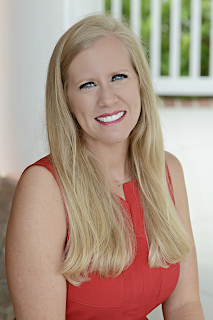

She lives forty-five minutes outside of Atlanta, GA. where she served as a Children's Ministry Director for many years. With the support of her husband and two children, she now stays home writing fiction and non-fiction.

She also serves on the women’s leadership team at her local church and writes for Crosswalk and Wholly Loved Ministries. You can check out her articles and novels at www.kristenterrette.com.

~*~
Back Cover Blurb for Kristen’s new novel, See You Monday:

Senior year. The homestretch. 

Honor student, Grace Warner, had it easy. Popularity, friends, attention from her crush, even a soccer scholarship offer—if only she can figure out her senior project to graduate on time. Getting approval to write about someone’s life-changing event, Grace recruits her sassy grandma as her mentor who can’t wait to tell the crazy story from her childhood.

Events in the early sixties are words in history books to Grace, but her grandma lived them. She witnessed the civil rights movement in full swing, desegregation becoming a reality in her southern town, Martin Luther King, Jr. moving the country with his iconic speech, and the country coming to a halt when President Kennedy was assassinated.

Grace loves finding out her family history but didn't know the project would have her noticing hardships and prejudices at her school she hadn’t before. When the homecoming court is announced and new kid, Jacob Horton, is nominated as a colossal prank, it brings Grace to a choice, much like her grandmother years before her. God is about to use her in a miracle if she chooses correctly. If she fails, a life could be lost.

Buy See You Monday online on Amazon:

~*~
Connect with Kristen:
Website - www.kristenterrette.com
Facebook - https://www.facebook.com/authorkristenterrette/
Twitter - https://twitter.com/KTerrette
Instagram - https://www.instagram.com/kterrette/
Goodreads - https://www.goodreads.com/author/show/16252020.Kristen_Terrette
BookBub - https://www.bookbub.com/profile/kristen-terrette
Pinterest - https://www.pinterest.com/kterrette2/

Sunday, March 21, 2021

Sharing Our Stories: Reading books and addressing racism in the stories and real life


How to Read Books from Different Eras
A guest post by Roseanna M. White

As a writer, I believe in the power of story. But before I was a writer, I was a reader who loved nothing more than being taken to a different time or place through the pages of a book. Books are powerful things—they have an amazing ability to create empathy in the heart of the reader, helping us to see things from new perspectives. Throughout history, books have moved culture and helped create change that we still see the effects of today.

Here’s the thing though—even books that were cutting edge for their time, that changed the world, are going to appear dated or even awful when we read them today. Why? Because the change has already happened. We’ve progressed, society as a whole has come to conclusions and taught those conclusions to the next generations. These are things that may not have happened if not for particular books…but the growth continued.

This is as it should be. But sometimes readers pick up a book written 20, 50, 80, 100+ years ago, and instead of seeing how this moved the culture, we simple gasp and are horrified. Sometimes people cry out against these books. Or sometimes they do the opposite—they say that because this book was world-changing, nothing within it could possibly be objectionable.

But how should we be reading these titles?

I believe this is a question worth asking. But more, we also have to judge not only the words on the page, but the intention of the writer. Mark Twain, for example, is famous for writing satirical passages that show the reader one thing, and then state another through the eyes of the main character, in such a way that the reader has little choice but to recognize the racism so common to a time period. I’m thinking specifically of the end of The Adventures of Huckleberry Finn, where Huck recognizes within Jim something far more than what he was taught a Black man should have. He doesn’t know how to reconcile his experience with what had been hammered into his head—but his struggle to do that invites the reader to examine his or her own biases and question what we’ve been taught. On the other hand, there are books like those written by Sir Arthur Conan Doyle in a similar time period, in England rather than America, where the narrator simply assumes that people with darker complexions must have darker hearts—an assumption never challenged within the pages. Ugliness equates with evil in these literary pages too.

Readers today obviously know this isn’t so—but we also choose not to toss out the entirety of Conan Doyle’s works, because we recognize good things within them too. This, my friends, is the beauty of the human mind and the beauty of literature. We can evaluate. We can argue. We can defend. We don’t need to censor—because we can think for ourselves and decide what is right and what is wrong. I’d argue that, in fact, we should and must do this with every book.

We stand on the shoulders of those who came before. I believe it’s critical to understand what that means, what they believed, where they were right, and where they were wrong. This is how we grow, and how our understanding grows with us.

But there are exceptions, and those exceptions are for when the reader does not have the ability to discern and judge for themselves. I’m speaking especially of children and children’s literature. I homeschool my kids, and we read primarily classics that have won Newbury Awards throughout the years. Stellar literature, to be sure—but even in these pages one can see evidence of prejudice, stereotyping, and racism. A fine example is Caddie Woodlawn by Carol Ryrie Brink. 

It’s a wonderful book, and it’s a book in which the title character actually goes out of her way and risks her life to protect the American Indians in her area. She’s battling the assumptions of her entire family and settlement in that moment—this is worth reading about. Even so, the author chooses phrases that we today would never choose. She makes assumptions about the nature of the indigenous people that we shake our head over. Should we still read this? Yes…if. If we also engage our kids in conversations about it. If we talk about the beliefs of the time and how we’ve grown. If we show how loving, fair-minded Caddie still had room for growth, and how we do today too.

Then there are books aimed at kids too young to even participate in a conversation like that—picture books. Picture books are, in my opinion, a category all their own when it comes to what care we should take. Because these are the books that shape our worldview and show our kids visually what is normal, what is acceptable, what is fun, what is serious. The images in those pages are going to help form their minds, one way or another. And those minds aren’t capable of reason yet. You can’t show your kids racist images on the page and then just say, “But…” and explain it away.

A great example of this is with Dr. Seuss’s books—a major hot topic conversation as of the writing of this. Dr. Seuss was a pretty amazing man. He was writing political cartoons that called for racial equality even before WW2, at a time when it was far from fashionable or accepted to do so. Even so, he gave in to fear when Pearl Harbor was bombed and drew cartoons impugning Japanese Americans…which he came to regret. After the war, he traveled to Japan, made friends, and wrote Horton Hears a Who as a result of his journey. His ideas, like all of our ideas, grew and changed over the course of his life. He came to new understandings as the years went by. And he is quoted by his relatives as deeply regretting the work he did that was racist in his earlier days. So it’s not surprising that the foundation that runs his estate conducted a study in 2019 to evaluate each of his books. They came to the conclusion that six of his sixty works contained offensive imagery or language. So after much consideration, they announced in March 2021 that they were pulling those six books from publication.

The media on both sides went crazy. You probably saw some of the fallout. Each side began looking for a villain to blame. Some people wanted to censor all Seuss. Other people wanted to go buy every Seuss book they could get their hands on and accused the left of “banning” Seuss when it was really his estate that made the call. But it seems to me both sides were missing the point—that the estate recognized, as Seuss did himself, that each work, each image matters. They made a decision to keep in print only those titles that wouldn’t risk teaching young children that one person is worth any less than another—a lesson many of Seuss’s stories teach so beautifully. They did what we all do when we’re reading for ourselves, and what we as parents or grandparents must do when reading to our kids: they asked questions, they evaluated, they used their discernment, and they made a judgment call.

Too often we get so entrenched in our ideas that we either throw out the good with the bad, or refuse to entertain the notion that there could be any bad in what we’ve called good. But nothing in life or in literature is so simple. And so, I invite you to read widely…but also to read deeply. 

Read with a willingness to learn but also to question. Read knowing that your perspective comes from standing on the shoulders of those who came before, those who wrote before…and know that your journey isn’t over, and neither is literature’s.

Keep reading. Keep talking about what you read. And keep encouraging others to evaluate the words and pictures in the pages thoughtfully. Let’s not just read and judge—let’s engage.

~*~
Author Bio:

Roseanna M. White is a bestselling, Christy Award nominated author who has long claimed that words are the air she breathes.


When not writing fiction, she’s homeschooling her two kids, editing for WhiteFire Publishing, designing book covers, and pretending her house will clean itself.

Roseanna is the author of a slew of historical novels that span several continents and thousands of years. Spies and war and mayhem always seem to find their way into her books … to offset her real life, which is blessedly ordinary.

You can learn more about her and her stories at www.RoseannaMWhite.com.

~*~
Connect with Roseanna:
Blog: https://roseannamwhite.com/blog/
Facebook: https://www.facebook.com/RoseannaMWhite/
Pinterest: https://www.pinterest.com/roseannamwhite/
Instagram: https://www.instagram.com/roseannamwhite/
Twitter: https://twitter.com/RoseannaMWhite
Website: https://www.roseannamwhite.com

Sunday, January 24, 2021

Sharing Our Stories: Thoughts on what it takes to improve race relations


Know Better, Do Better
A guest post by Marie W. Watts

Being the change we seek in race relations requires a different mindset.

Have you heard the following?

“If you do what you’ve always done, you get what you’ve always got.”

For the sake of our nation, we cannot continue business as usual. But what’s the first step in breaking the cycle?

The psychological phenomena, the Pygmalion Effect, offers clues. This paradigm focuses on self-fulfilling prophesies. High expectations in a certain area led to enhanced performance. If I expect race relations to get better, they will get better. While I cannot change other people, I can change myself.

Ask yourself this question: Are you a person who wants better race relations or are you a person who improves race relations?

Just wanting something is nice but working for it makes all the difference. Once we begin with the mindset that we are someone who works to improve race relations, then we can begin to build habits that support our identity as a change agent.

Our mindset is enforced by small wins. And these small victories become habits. Soon these new behaviors become second nature.

These are some examples of small personal wins on the journey to racial equality:

· Do you hear/read something that reinforces negative stereotypes? Research it. Is it true?

Offer different opinions to others. Ingrained cultural stereotypes are difficult to tune out. Recognize yours and change your habits—stop acting on them.

· Smile and greet persons who are different from you. Do not ignore them.

· Be thoughtful while voting or contacting your elected representatives. Do you urge them to support legislation that furthers your goal of improving race relations?

· Volunteer or donate to causes that support your identity.

· Watch programs or read books about the effects of inequality on those who are different from us. Have you seen the PBS award-winning series “Eyes on the Prize”?

· Cultivate friendships with people who are different from yourself.

Set a goal for 2021 to remake your identity. The changes you make within radiate to those around you, setting the trajectory towards equality.

~*~
Author Bio:

Marie W. Watts is a former employment discrimination investigator and human resource consultant with over twenty-five years of experience. In pursuit of justice in the workplace, she’s been from jails to corporate boardrooms seeing the good, the bad, and the ugly of humans at work. 

Her on-the-job observations came in handy when she co-authored a textbook about how to behave at work, Human Relations 4th ed. Additionally, her work has been published in the Texas Bar Journal and the Houston Business Journal as well as featured on Issues Today syndicated to 119 radio stations, NBC San Antonio, Texas, and TAMU-TV in College Station, Texas.

A popular diversity and employment discrimination trainer, Marie has trained thousands of employees to recognize their own biases and prejudices and avoid discriminating against others in the workplace. She has brought her experiences to life in the trilogy Warriors For Equal Rights about the struggles of ordinary people who work at the little-known federal agency, the Equal Employment Opportunity Commission (EEOC).

She and her husband live on a ranch in central Texas. In her spare time, she supports a historic house and hangs out with her grandsons. For more information about Marie and her stories about life, visit www.mariewatts.com.

~*~
Connect with Marie:
BookBub - https://www.bookbub.com/profile/marie-w-watts
Facebook - https://www.facebook.com/mariewattsbooks
Twitter - https://twitter.com/MarieWattsBooks
Instagram - https://www.instagram.com/mariewattswriter/
Linkedin - https://www.linkedin.com/in/marie-w-watts-5b2a2b/

Friday, September 4, 2020

Sharing Our Stories: Introducing the writers


Introducing Sherrinda Ketchersid, in her words:

When I applied to be a contributor to Alexis Goring’s new blog series, Sharing Our Stories: Being the Change We Seek, I did not expect to be chosen. I’m a 55-year-old white woman who has just started this journey of anti-racism—I have much to learn.

I come from a white conservative background where both grandfathers were preachers. While I was brought up in a home of love and acceptance, I grew up in America where laws were put into place that benefited me and my whiteness. My life was white-centered, and I thought nothing of it until this year with the death of George Floyd.

Floyd’s murder sparked a discussion between me and my niece, Courtney. Hearing her lament and outrage sparked a disquiet in me that I couldn’t push away. She began purchasing books to educate herself about racism, and so I followed her lead, buying up books by Latasha Morrison, Robin DiAngelo, Reni Eddo-Lodge, and Ibram X. Kendi, to name a few. 


We ended up going through the daily exercises in the book, Me and White Supremacy by Layla Saad, and I was floored at my own ignorance, white-centeredness, fragility, and bias. How could I have gone through life without realizing I am part of the problem? It has been the question that has spurred me to keep learning and has made me realize that this is a life-long journey, not a quick-fix.

In the short time I’ve been on this anti-racist journey, I’ve realized this path is also one of ministry. Racial reconciliation is a ministry that is God-approved. 

We are God’s ambassadors, charged with telling the people of the world they can be reconciled to God through Christ. But as reconcilers in this world, we must love God and love others first and foremost. We cannot love others well if we have forced them into a place of oppression, as we have people of color in America (and around the globe). 

We need to work to address this massive problem of institutional racism and free people of color from the challenges they face.

I want to be a voice to help educate white people like me who just don’t know what they haven’t been taught. I want to be a voice for good in the ministry of racial reconciliation. 

While I am sure I will make mistakes, I am committed to racial reconciliation and speaking out again racism, blatant or not. I want to call out injustice and bias when I see it. I want to cultivate a heart that is brave when racial conversations are difficult. But most of all, I want to cultivate a heart that loves God and others, no matter the cost. 

I’m so thankful for the opportunity to be a part of this blog, and I pray God used the words of each contributor to motivate others to be a voice of change in the journey of racial reconciliation.

~*~
Author Bio:

Sherrinda Ketchersid is an author of historical romance and a minister’s wife who loves to paint in her Bible. 


She loves to read, spend time in her flower garden, and try her hand at new crafts. She likes to blog and is part of a group called The Writers Alley. 

Sherrinda lives in north-central Texas with her husband of 35 years. With four grown children, three guys and a gal, she has more time and energy to spin tales of faith, fun, and forever love.

~*~
Connect with Sherrinda:
Website: www.sherrinda.com
Facebook: https://www.facebook.com/SherrindaKetchersidAuthor/
Twitter: https://www.twitter.com/sherrinda
Instagram: https://www.instagram.com/sherrinda
Pinterest: https://www.pinterest.com/sherrinda/
Goodreads: https://www.goodreads.com/author/show/19022507.Sherrinda_Ketchersid
BookBub: https://www.bookbub.com/profile/sherrinda-ketchersid
Amazon: https://www.amazon.com/Sherrinda-Ketchersid/e/B07Q5Y8QHF/